Ekati goes dark: Canada's first diamond mine finds no buyer
A British Columbia court has placed the Northwest Territories mine in receivership after an eight-week sale process drew no viable bid. Production stops in mid-August; about 340 workers remain from a 2024 payroll of 700 staff and 542 contractors.
By The Mines Desk
What changed
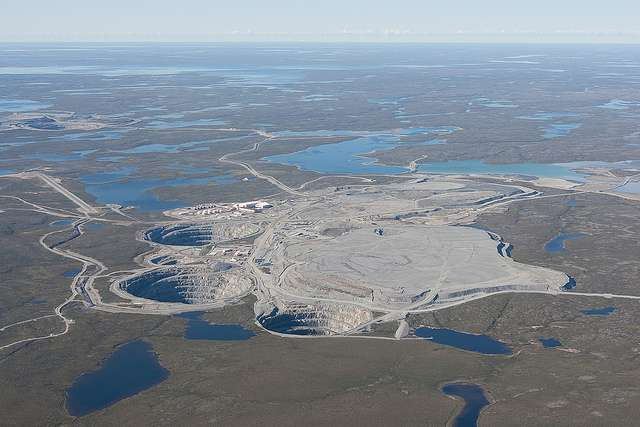
The order arrived with none of the ceremony that attended the mine's opening. On July 14, a British Columbia court approved a receivership for the Ekati diamond mine at the request of the Northwest Territories government, appointing PricewaterhouseCoopers to wind the operation down.
What it means
- The diamond market spent two years asking when supply discipline would rescue prices, and here is what the rescue actually looks like: not a managed cutback but a court order, 340 jobs and a country's first diamond mine going to reclamation. Supply is leaving this market the hard way.
- The question the trade should sit with is that a one-carat natural stone is firming at the same moment the mines that produce it are proving unfinanceable. When the turn finally comes, the carats will not be there to meet it.
Key figures
| OrderReceivership · 14 July 2026 · B.C. court | |
|---|---|
| ReceiverPricewaterhouseCoopers | |
| Production endsMid-August, then a five-week wind-down | |
| Workforce~340 now · 700 + 542 contractors in 2024 |
Source: The wind-down · as ordered
No buyer came, so the court did
Production is expected to stop by mid-August, after which a roughly five-week closure sequence hands the site over to reclamation. Ekati was Canada's first diamond mine when it opened in 1998; nearly three decades later, it will be the country's most consequential diamond closure.
The arithmetic of the final weeks was unforgiving. Owner Burgundy Diamond Mines had operated under court protection since May, while an eight-week search for a buyer or fresh investment came up empty.
Ottawa had already extended roughly C$185 million in loans, and a further C$50 million made available in May was never drawn because no viable bid materialized to anchor it.
By July 10 the mine held about C$14 million in cash and was expected to exhaust it within days. Its last diamond sale brought in C$27.4 million, two million short of projections. When the money and the bidders both failed to appear, receivership was the only door left.
Ekati's final ledger · C$ millions
Source: The wind-down · as ordered
Three hundred and forty people, last in line
The human ledger is harder reading. Ekati employed about 340 people as of March, down from 700 employees and 542 contractors as recently as 2024.
Court filings set aside C$3.5 million for accrued vacation pay and C$2.1 million for a final payroll, and the receiver holds broad authority to conduct layoffs without the notice ordinarily required under the Canada Labour Code.
Union of Northern Workers president Gayla Thunstrom warned that "workers' severance is at the bottom of the creditor payment list."
One protection did survive the filing: just over C$326 million in environmental security is shielded from creditor claims, ring-fencing the site's cleanup.
| Figure | |
|---|---|
| Reclamation Security | 326 |
| Federal Loans Extended | 185 |
| May Facility, Never Drawn | 50 |
| Last Diamond Sale | 27.4 |
| Cash On Hand, 10 July | 14 |
Only the reclamation money is protected from creditor claims What was left when the door closed: the mine's last balances. Carat Capital graphics desk.
The safest supply just got a closing date
Nothing about the failure was unique to Ekati. Natural diamond demand has been ground down by lab-grown alternatives, tariff friction, geopolitical tension and a prolonged slump in Chinese buying, and prices for the mine's run-of-mine production never recovered enough to carry its costs.
Burgundy chief executive Jeremy King called the mine's role in the territory an extraordinary contribution across more than 25 years, and the description is fair: for a generation Ekati anchored an industry that made the NWT the world's third-largest diamond producer by value and made Canadian origin a brand of its own.
What closes with the gates is supply the market had long counted as safe. Canadian goods commanded a provenance premium precisely because they carried none of the questions attached to other origins, and Ekati's carats fed that pipeline for 28 years.
With the territory's remaining mines working against their own depletion clocks, the majority of Canada's diamond output now has a visible end date, and the trade's provenance-conscious buyers, from Tiffany to the Canadamark program's licensees, will be bidding for a shrinking pool.
The story so far
Go deeper
Method
Only the reclamation money is protected from creditor claims